Silvia Falsaperla


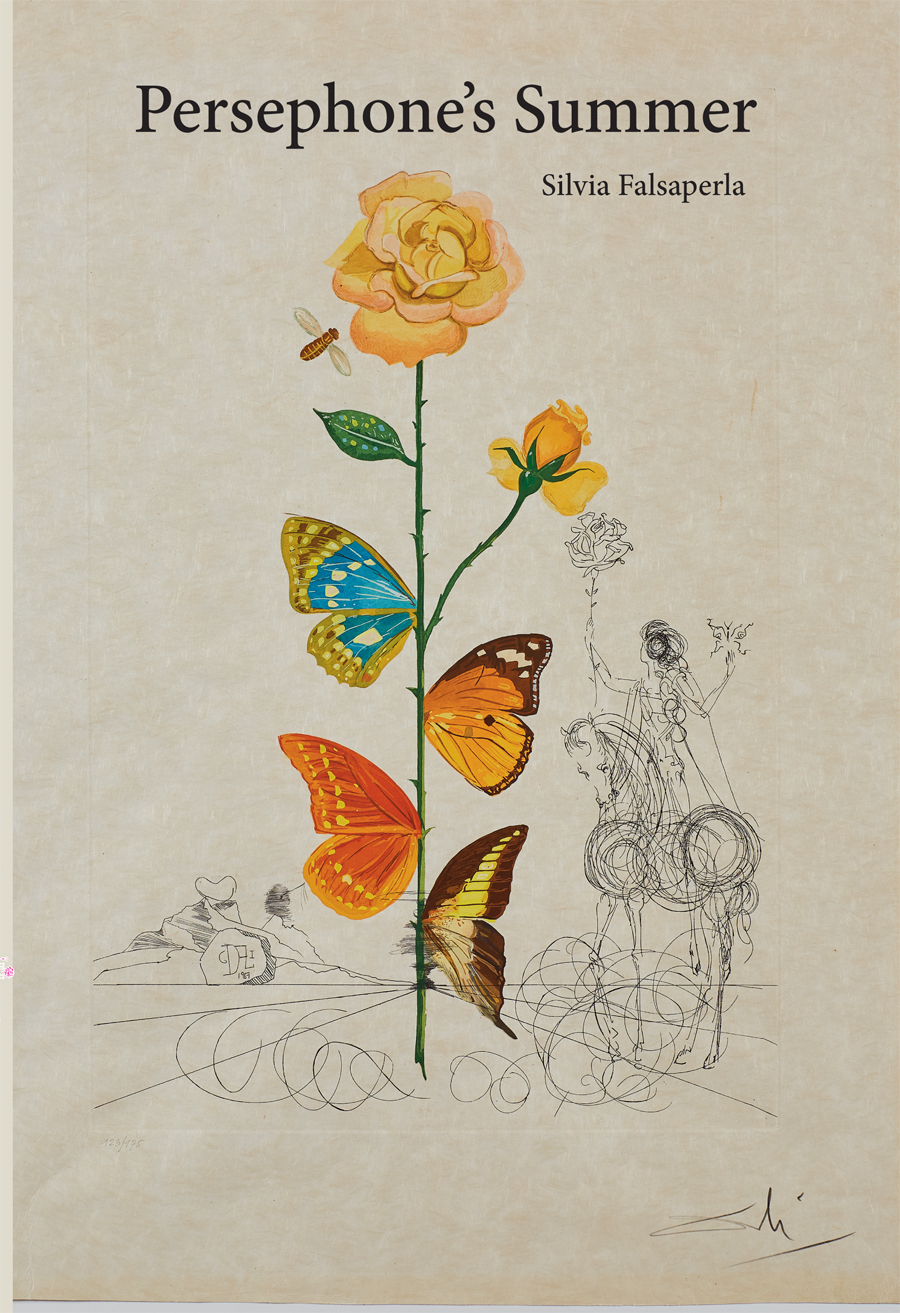
Persephone's Summer is a poetic mosaic. The title alludes to the ancient Greek myth of Persephone, the goddess of the underworld who resurfaces every summer, which Silvia Falsaperla uses as a multi-layered metaphor: the emergence of a female creative/poetic voice and the richness/wonder of the natural world. The collection also explores the strife/dynamics of the female-male relationship as reflected in the Persephone/Hades myth, as well as the multi-faceted aspects of life: love, motherhood, poetry, technology. The unifying theme of Persephone's Summer is resurgence, a fruitful summer, a much needed and welcome concept to submerge the darkness/stasis of our contemporary world.
Falsaperla's poetry transports us into juxtaposing realms of myth and reality of bygone times and the now. Her brilliantly chosen diction and skilfully created images suspend us in time and place long enough for us to glimpse into the sublime beauty of the everyday: a melon, a bird, a grain of sand, dead flowers, a kiss. The skilful rhythm of her words renders the mortal with immortality.
— Carmelinda Scian, author of Yellow Watch
In Persephone's Summer, Falsaperla beautifully conveys the insights one carries from having lived in dark spaces. New perspectives on once-familiar locations and relationships are unearthed through astute points of view. And with vivid details on people in their natural and unnatural environments, Falsaperla paints memorable tableaus of light and shade that are rooted in deep understandings of place, history, and mythology.
— Ryan Gibbs, Communications professor, Lambton College\
Falsaperla's poetry collection is a passionate delight. The poems are gathered in four sections. Each section slyly delights in describing the ache and arc of desire or the poems echo with glee ancient myths and personae, evoke views of the coastal land and seascapes of Italy, domestic rhythms, urban decay and dysfunction, and capture the wonder of flowers and birds on the quiet streets of Toronto. alsaperla casts a wide poetic net; you can feel the lover's desire, hear the waves, see the sexy flowers, taste the salty air, smell the lost and homeless, and enter with the poet into an ancient myth evocatively described.
— Carmelo Militano, author of The Patina of Melancholy
ISBN 78-1-77171-588-1
Poetry
66 pages
6 x 9
$24.95
Now available
customers
customers
customers